

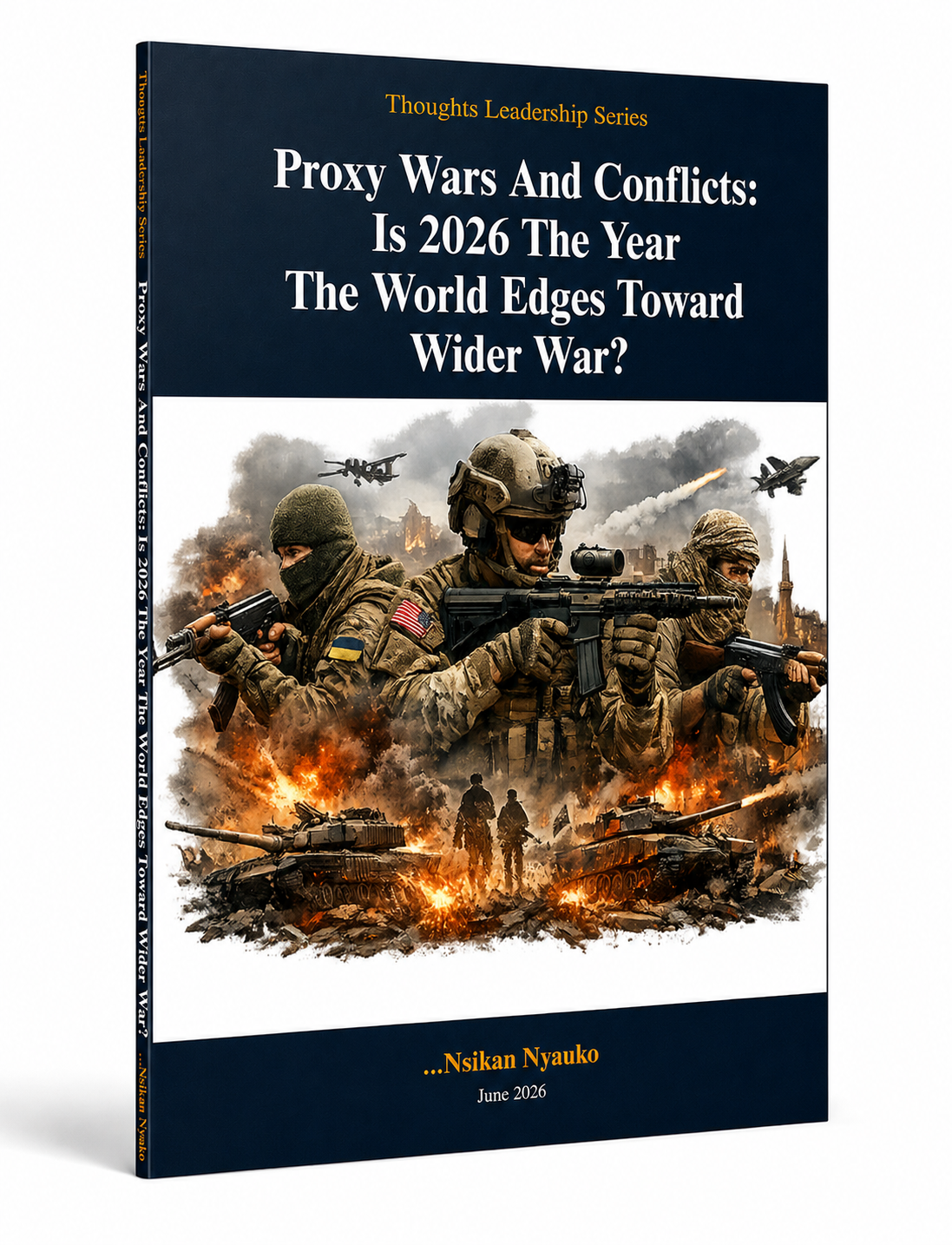
Proxy Wars And Conflicts: Is 2026 The Year The World Edges Toward Wider War?
Summary
2026 is not defined by one approaching world war, but by many connected fires. Ukraine, the Middle East, Sudan, the Sahel, Taiwan, Korea and the Red Sea reveal a world where local wars now carry global consequence. States outsource risk through militias, intelligence, cyber operations, arms race and disinformation, believing conflict can remain below the threshold of open war. Technology quickens escalation. Proxy networks blur responsibility. Domestic politics punishes restraint. Weak institutions arrive late, after violence has set the terms. The danger is a chain of connected escalations, each actor convinced the next step is manageable, until history makes the unthinkable thinkable.
Selected Pull Quotes
“Proxy conflict is the cowardice of power disguised as strategy. Its cruelty is that it permits the powerful to rehearse catastrophe on another’s soil
“2026 may not be remembered as the year wider war began. It may be remembered as another year in which the world walked close to the edge and stepped back. The forces pushing toward escalation are strong: ambitious powers, armed proxies, weakened institutions, economic stress, and publics trained to interpret compromise as betrayal
“Modern politics often treats restraint as weakness, but restraint is sometimes the highest form of strength. It requires a leader to resist spectacle, and privilege survival over applause. That is rare. But it is necessary